


“Insane, absurd, ridiculous, nuts” were just some of the words used to describe the delay which meant Marcus Ericsson’s stalled car was sat on the track facing the wrong way around and in a relative blind spot at Laguna Seca.
While TV cameras did not show the spin live, cameras cut to Ericsson pointing backwards and from that moment it took a minute and a half for IndyCar to throw the full course caution - although local yellows were displayed.
The helmet cam footage from Pato O'Ward passing Marcus Ericcson. Yeah, Hinch is right, this is ridiculous. You literally can't see the 28 car until it's too late to avoid a collision.#IndyCar pic.twitter.com/sEi5CnjVGN
— Ryan Erik King (@RyanErikKing) July 27, 2025
It caused a big reaction with Fox’s TV commentators, Will Buxton and ex-IndyCar drivers James Hinchcliffe and Townsend Bell delivering those above-mentioned quotes.
The Fox broadcast also showed an onboard from Pato O’Ward’s car. If this is your first time seeing the incident, I challenge you to try and spot Ericsson’s car first time - while also looking at the road and steering wheel like the driver would - in the video above.
Below, we have overlayed a wider shot so you can see where Ericsson's car is positioned and a car in a similar position to O'Ward when the still from his onboard is taken, which shows the blindspot.
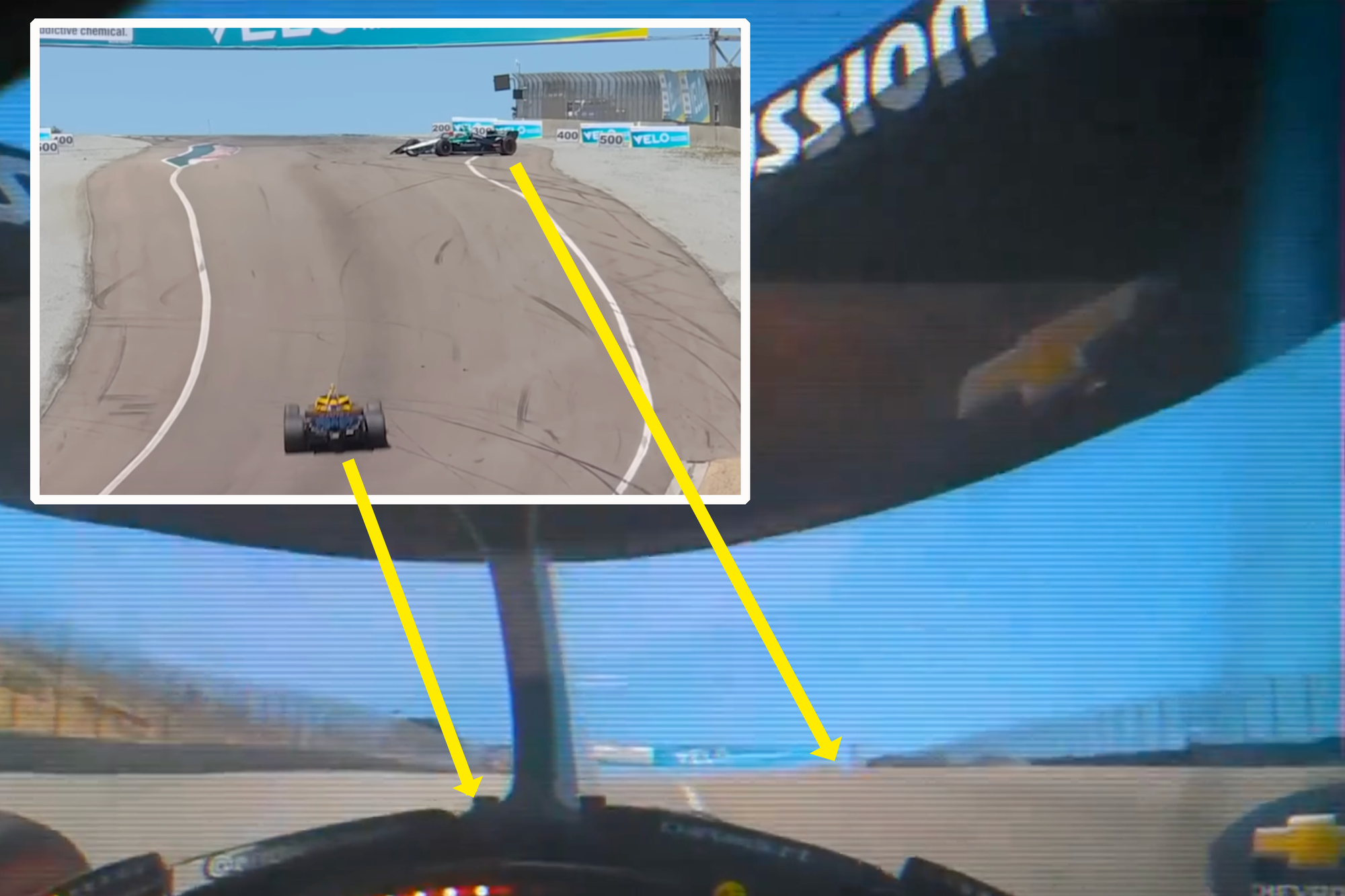
It's like Ericsson isn't even there! Terrifying.
After the race Ericsson tweeted: “Happy to not get hit whilst sitting at a blind spot on the track for 3 laps…” (ed. note - The Race did not count three laps and it was likely fewer)
It’s pretty clear that IndyCar was trying not to call a full course caution and neutralise the race in the hope that Ericsson would get going again.
This was complicated further by the fact that the addition of the hybrid unit mid-season last year, which means that the cars can be restarted by the driver in the cockpit immediately instead of needing one of the safety crew to physically insert the starter motor into the rear of the car.
But Ericsson’s Andretti crew were getting error messages while they tried to give him a steering wheel setting to restart the car.
We have reached out to IndyCar for comment on the incident.
Under caution for Marcus Ericsson. pic.twitter.com/kCltpsG5md
— INDYCAR on FOX (@IndyCarOnFOX) July 27, 2025
Coincidentally, immediately after the full course caution flew, Ericsson was able to get going again.
“I was definitely driving around thinking, why is there a car sideways - well, technically backwards - going into the Corkscrew, and we're green for two laps?” said race runner-up Christian Lundgaard.
“Yes, there's a local yellow, but if someone isn't really paying attention, changing a switch on the steering wheel, it can go terribly wrong.”
DNF in Laguna. We were having a decent day until the skid plate broke and folded under the car making me a passenger. Happy to not get hit whilst sitting at a blind spot on the track for 3 laps... Onto Portland #ME28 #INDYCAR @AndrettiIndy @HondaRacing_US pic.twitter.com/XIYJehpAzB
— Marcus Ericsson (@Ericsson_Marcus) July 28, 2025
While it’s fairly obvious this was a dangerous situation that needed taking care of quicker, you do have to take into consideration that IndyCar is criticised whatever it does. If it called the caution immediately there it would no doubt be criticised for neutralising the field and giving drivers another chance to attack the dominant Alex Palou.
Plus, the local yellow does already encourage drivers to slow down and be aware of an incident happening.
However, as you can see from O’Ward’s onboard, Ericsson was stopped in a really dangerous place and perhaps race control didn’t realise how much of a blind spot there is where Ericsson stopped - because cars don’t ever stop there - and that’s why the caution was held off for as long as it was.
Regardless, this is a good opportunity for learning and IndyCar has shown that it can do that.
It was too slow to put out a full course caution for Louis Foster crashing at Gateway. There's no guarantee an earlier caution would have prevented the following incident when Josef Newgarden crashed into him, but you certainly have to believe it would have reduced the opportunity.
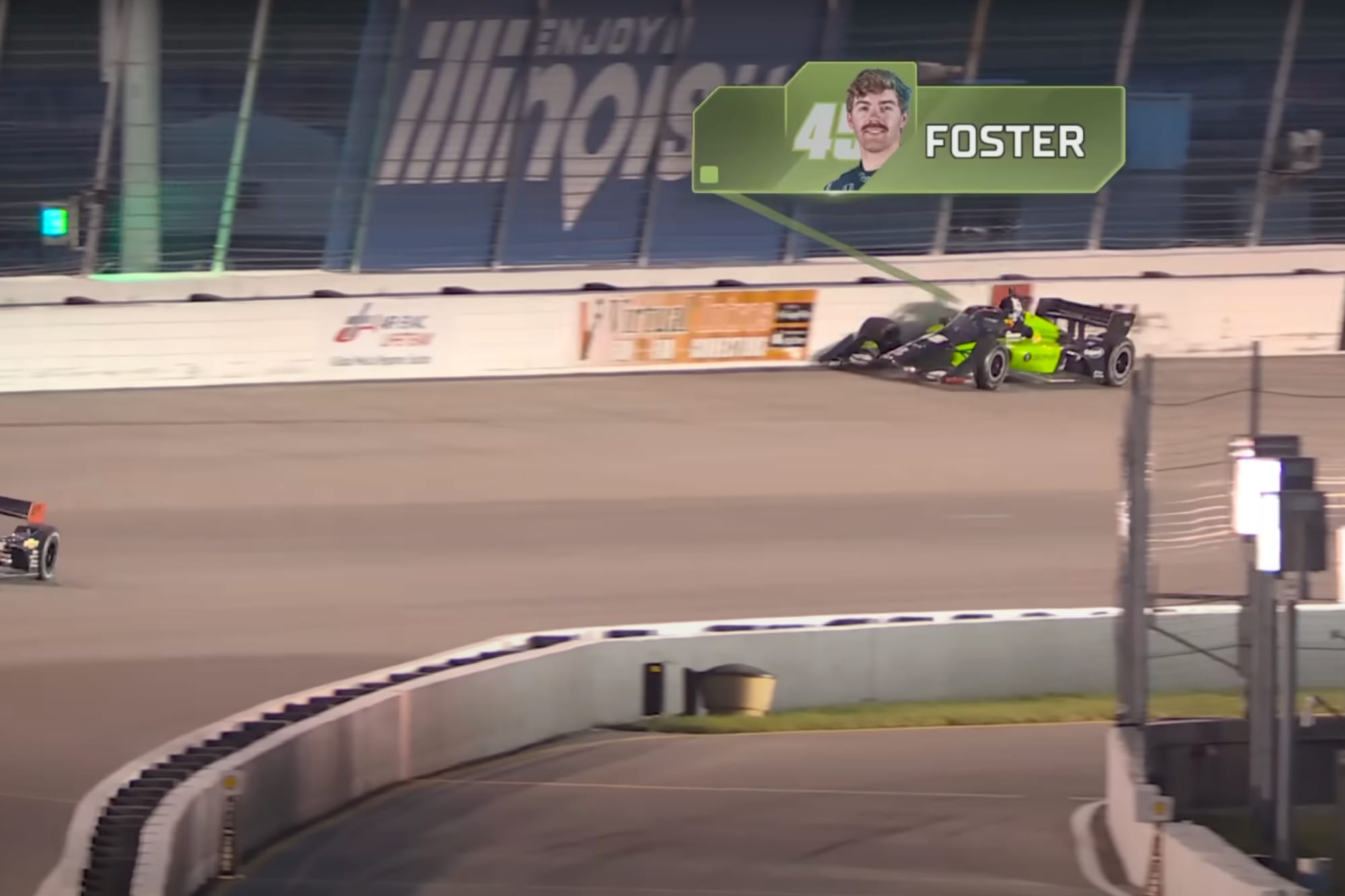
You can see from the picture above Foster is touching the wall and extremely likely to kick off a prolonged accident, and the green flag is still visible to the left.
And you can see the image below, Foster has a loose wheel and is pointing backwards on the main straight and there is still a green flag (top left), with the blue car of Newgarden about to have nowhere to go.
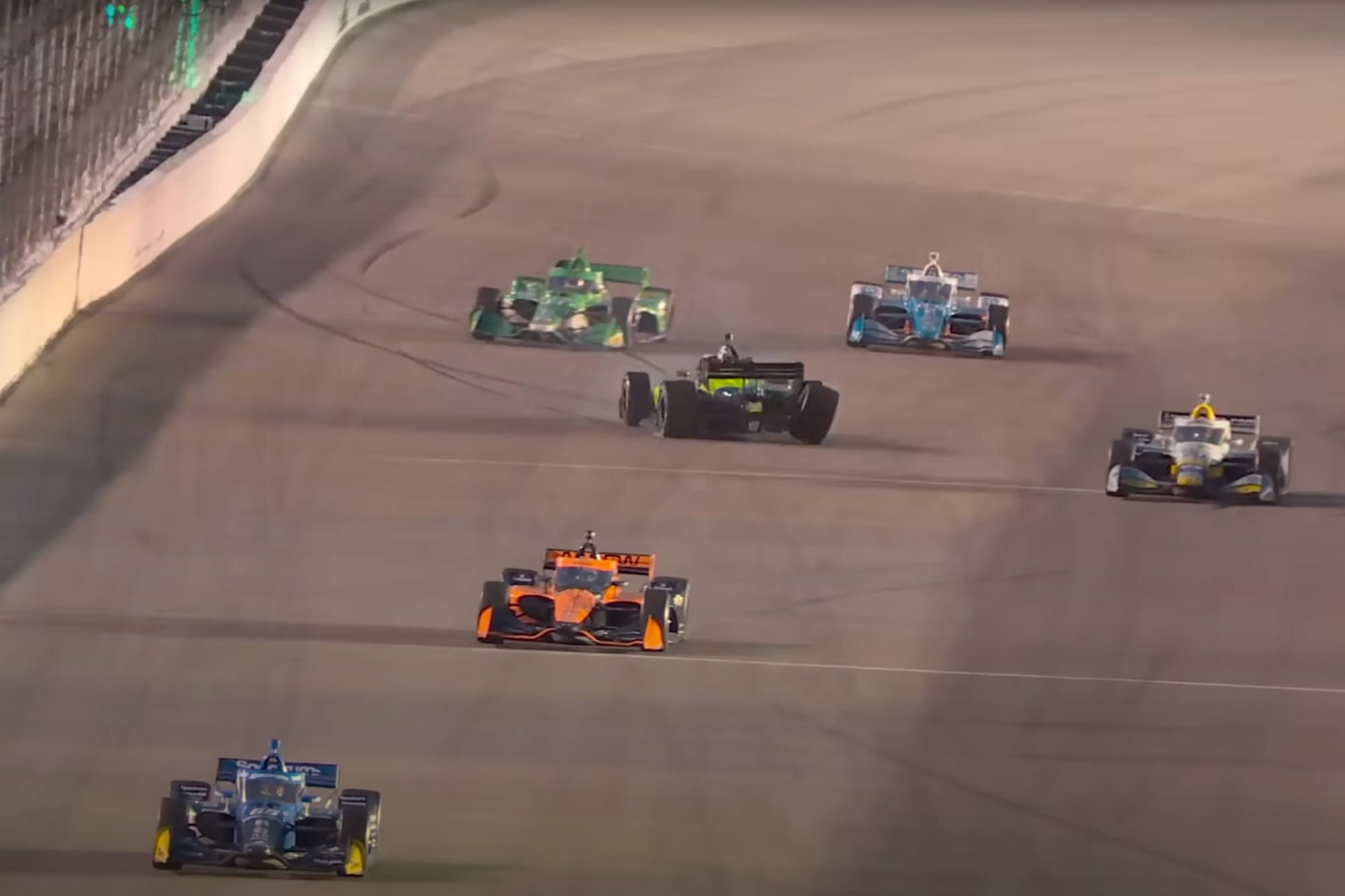
The next time a similar incident happened in that race, the yellow was already out before that driver had finished crashing, just after they hit the wall, similar to where Foster was in the first picture. That gave drivers more time to slow and react.
Of course, these are isolated incidents and all the good calls IndyCar makes tend to go without much recognition, such is the nature of things.
An on-board look from Josef Newgarden's No. 2 after contact with Louis Foster. pic.twitter.com/s7vVzjtppW
— INDYCAR on FOX (@IndyCarOnFOX) June 16, 2025
But one of these incidents resulted in a massive crash and thousands of dollars of damage, and the other at Laguna almost did. It's important for everyone these incidents are analysed, which I'm sure IndyCar will do in great detail.
Another incident created a talking point
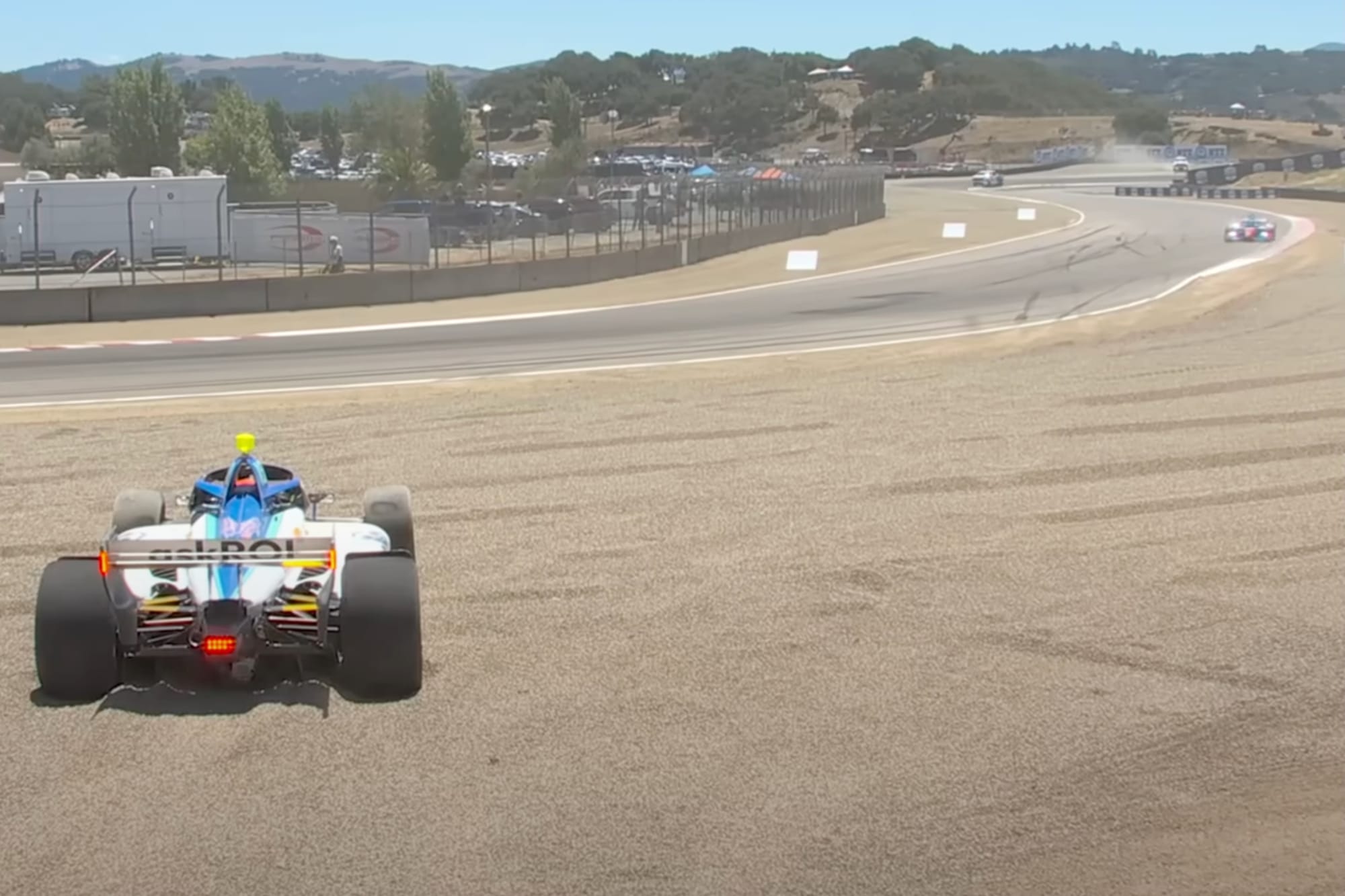
Another incident caught the eye in the race when Rinus VeeKay was punted off unceremoniously by Kyle Kirkwood at Turn 4 and became beached in the gravel.
IndyCar also elected not to call an immediate full course caution here.
This is a competition decision in keeping with a precedent set by IndyCar which was called for by drivers for a long time.
A good day ruined by someone else’s mistake. We showed really good pace, until that moment. Eyes forward to Portland!